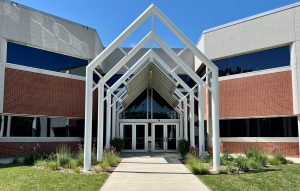
 The Center for Nondestructive Evaluation (CNDE) was established in 1985 as a National Science Foundation (NSF) Industry/University Cooperative Research Center (I/UCRC), and graduated in 2016. NDE plays an important role in ensuring the safe use of engineered systems. CNDE has a long history of working with industry to provide cost-effective tools and solutions which address relevant problems for a variety of industrial sectors and applications.
Nondestructive evaluation (NDE) is the science, engineering, and application of evaluating a system or structure without affecting its future usability and functionality. NDE plays a critical role in the safety and economics of many of our engineered systems, systems for which performance demands are ever increasing. As critical and costly engineered systems age, the focus turns to life extension and the desire to continue use beyond the original design goal using risk-informed decision-making processes. Proper inspection leads to detecting the presence of age- or service-induced fatigue and damage.
With ~30 scientists and engineers, and a 52,000 sq. ft. facility adjacent to Iowa State University (ISU) campus, CNDE is the premier US research organization for the development and application of inspection and sensing technologies. Extensive materials characterization studies and inspection system developments have been applied and implemented for metals, ceramics, and composites of interest to a number of industrial sectors.
Experimental and theoretical capabilities are available for the full range of inspection methods, including: ultrasonics, acoustics, electromagnetics, radiography, magnetic particle, liquid penetrant, thermal, shearography, ground-penetrating radar, microwave, millimeter wave, and terahertz. Historically, CNDE has developed simulation models and tools in conjunction with several inspection modalities (e.g., ultrasonics, eddy current, radiography, and microwave).
These simulation tools enable time-efficient parametric studies which allow NDE engineers to optimize their inspection needs as a function of geometry, materials properties, and flaw types of interest. The fundamental understanding of inspection physics applied to innovative measurement approaches are at the heart of CNDE’s accomplishments.